

Air–sea interaction and surface waves
Momentum, heat, and moisture exchange under evolving winds, currents, stratification, and sea states.
Explore SCOAR →Hyodae Seo: Professor in the Department of Oceanography and Associate Director of the Uehiro Center for the Advancement of Oceanography.
The Seo Coupled Ocean–Atmosphere Research (SCOAR) Lab investigates how the ocean, atmosphere, and surface waves interact across scales—from turbulent air–sea exchange to extreme weather and regional climate.
Our research combines observations, theory, numerical modeling, and data-driven approaches to study coupled ocean–atmosphere–wave dynamics, extreme weather, air–sea exchanges, and short-term climate variability. We aim to improve forecasts, coastal and offshore hazard assessments, resilience to extreme events, and decision-making for communities, infrastructure, and maritime operations.
Our lab also engages the public on critical issues such as extreme weather, climate, and renewable energy, aligning our research efforts with the United Nations Sustainable Development Goals and UC•AO activities.
High-resolution atmosphere–ocean–wave simulations reveal feedbacks that component models cannot represent alone.
Satellite products and in situ measurements connect modeled processes with the evolving ocean and atmosphere.
Statistical and machine-learning approaches help identify regimes, mechanisms, and sources of predictability.
Momentum, heat, and moisture exchange under evolving winds, currents, stratification, and sea states.
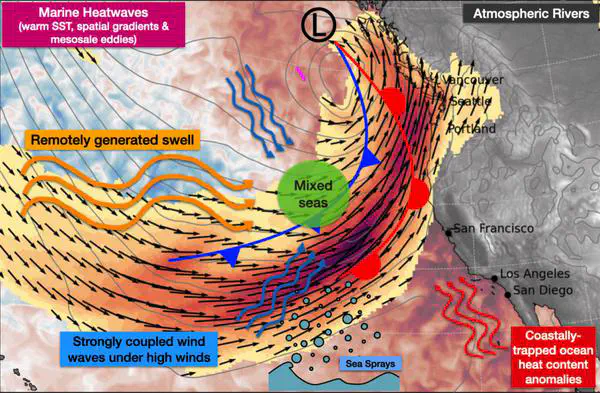
Explore SCOAR →Ocean and wave influences on tropical cyclones, atmospheric rivers, monsoons, and coastal weather.
View related projects →Coupled atmospheric wakes, surface-wave responses, upper-ocean mixing, and ocean feedbacks around wind farms.
View offshore-wind research →Physical, statistical, and data-driven approaches for improving regional coupled prediction.
Browse publications →We are pleased to welcome Mr. Yu Komazawa to Seo Lab. Yu is a visiting student supported through the Instructor-Led Research Experience (ILRE) program, part of the educational partnership between Uehiro Center for the Advancement of Oceanography (UC•AO) at University of Hawaiʻi at Mānoa and Uehiro Laboratory of Oceanography (ULO) at Hokkaido University. His research focuses on changes in ocean circulation and structure and the processes through which these changes affect human society. He is particularly interested in recent changes in the Kuroshio system, including the northward shift of the Kuroshio Extension and the Kuroshio Large Meander, and their potential impacts on extreme heat, fisheries, and other aspects of society.
During his visit to Seo Lab, Komazawa will examine the upper ocean mixing processes and the impact of air-sea fluxes over the Kuroshio–Oyashio Extension region. He is co-supervised by Dr. Sid Kerhalkar and Dr. Cesar Sauvage.
Welcome to the SCOAR Lab, Yu!
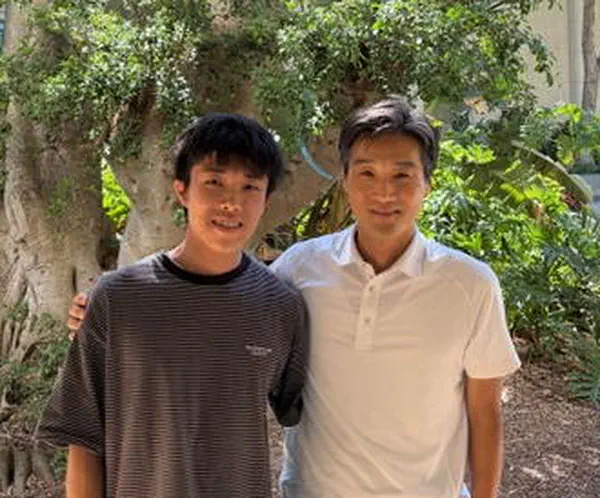
We are pleased to welcome Takami Otsubo as a new graduate student in the Department of Oceanography at the University of Hawaiʻi at Mānoa. Takami is originally from Hokkaido, Japan, a region known for its heavy snowfall and rich natural environment. Growing up in this setting inspired his early interest in climate science.
In March 2026, he received his bachelor’s degree in Earth and Planetary Sciences from Hokkaido University, where he specialized in physical oceanography and climate science. His research interests include ocean circulation and interactions between the ocean and atmosphere. Takami is a recipient of the prestigious Crown Prince Akihito Scholarship.
He will be co-advised by Prof. Hyodae Seo and Prof. Bo Qiu and will study SWOT observations and numerical modeling of wave–current interactions in the Kuroshio Current.
Welcome to the SCOAR Lab, Takami!
Seo Lab in the Department of Oceanography at the University of Hawai‘i at Mānoa invites applications for a postdoctoral researcher to join the ONR-funded SAFARI team (Study of Air–Sea Fluxes and Atmospheric River Intensity). The UH SAFRI project will utilize a combination of in situ and satellite observations, along with high-resolution coupled model simulations, to investigate the link between spatial variability of SST–wind–wave–current interactions and the diabatic intensification or dissipation of atmospheric rivers through air-sea heat and momentum fluxes.
The successful candidate is expected to bring expertise in surface waves and air–sea interaction modeling, satellite remote sensing (e.g., SWOT), or analysis of in situ observations of air–sea fluxes, turbulent boundary layer processes, and/or their parameterizations.
Please apply online.